Your office chair is rolling over your floors dozens of times a day. Without a quality chair mat, hardwood gets scratched, carpet gets flattened, and you’re fighting resistance every time you reach for your keyboard. A good chair mat is one of those unsexy purchases that genuinely transforms your day — smooth gliding, protected floors, and less fatigue from constantly wrestling your chair back into position.
Whether you have gleaming hardwood, thick carpet, or luxury vinyl plank, there’s a chair mat built for your situation. We’ve rounded up the best options in 2026, from budget-friendly basics to premium polycarbonate that’ll last a decade.
Also see: Best Ergonomic Chairs Under $500 | Best Desk Mats 2026 | Best Standing Desks 2026
Quick Comparison #
| Product | Best For | Size | Material | Price |
|---|---|---|---|---|
| Gorilla Grip Premium | Hardwood | 47" x 35" | Polycarbonate | ~$45 |
| Vitrazza Glass Chair Mat | Luxury/Hardwood | 46" x 60" | Tempered Glass | ~$349 |
| Deflecto SuperMat | Heavy Carpet | 45" x 53" | PVC | ~$65 |
| AmazonBasics Polycarbonate | Budget Hardwood | 35" x 47" | Polycarbonate | ~$38 |
| Lorell Nonstud | Low Pile Carpet | 46" x 60" | PVC | ~$55 |
| Floortex Cleartex | All Floors | 48" x 51" | Polycarbonate | ~$89 |
| COREPAD XL | Gaming/Oversized | 55" x 47" | PVC + Felt | ~$79 |
Best Office Chair Mats in 2026 #
Gorilla Grip Premium Chair Mat — Best Overall for Hardwood #
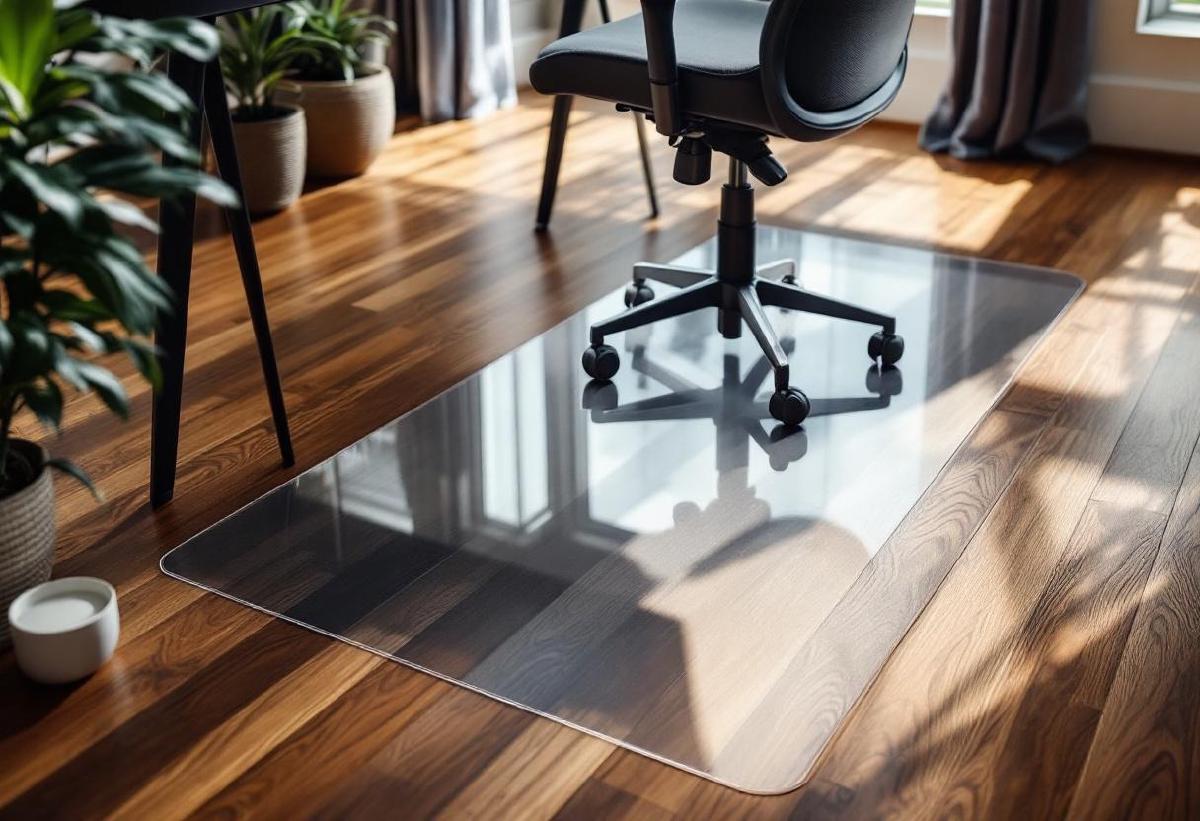
The Gorilla Grip Premium is the sweet spot between quality and price for hardwood floors. It’s crystal-clear polycarbonate — not flimsy PVC — so it won’t crack, discolor, or curl at the edges after a few months. The smooth top surface lets your chair glide effortlessly, while the non-slip backing keeps the mat anchored without damaging your floors.
At 47" x 35", it covers enough real estate for most single-monitor setups. If you have a wider desk or tend to push back frequently, consider sizing up. The 0.1" thickness is rigid enough to stay flat without needing to be “broken in.”
Key Features:
- Crystal-clear polycarbonate (won’t yellow)
- Non-slip backing designed for hardwood and hard floors
- Multiple size options (35"x47" up to 48"x60")
- BPA-free, no chemical smell
Pros:
- Stays flat out of the box — no warping
- Affordable for polycarbonate
- Looks great on hardwood
Cons:
- Smooth backing not suitable for carpet
- Edge can feel sharp on bare feet
Check Price on Amazon US | Check Price on Amazon UK
Vitrazza Glass Office Chair Mat — Best Premium Pick #
If you’ve invested in a beautiful hardwood floor or luxury vinyl plank, the last thing you want is a cheap plastic mat ruining the aesthetic. Vitrazza makes tempered glass chair mats that are genuinely gorgeous — completely clear, scratch-resistant, and rated to hold over 1,000 lbs.
Yes, they’re expensive ($299–$499 depending on size), but they’re effectively permanent. No yellowing, no cracking, no replacing every two years. The glass is 3/8" thick with polished, beveled edges, and it comes with rubber dots on the underside to prevent sliding.
This is the chair mat for people who care about their workspace looking as good as it performs.
Key Features:
- Tempered safety glass — won’t shatter into shards
- Available in multiple shapes including round and custom sizes
- 3/8" thick with beveled, polished edges
- Rubber dot backing for grip on hard floors
Pros:
- Permanently clear — no yellowing ever
- Architectural-quality look
- Virtually indestructible
- Silent rolling
Cons:
- Expensive (though long-term value is excellent)
- Heavy (~30 lbs) — tricky to move
- Hard floors only
Check Price on Amazon US | Check Price on Amazon UK
Deflecto SuperMat Heavy-Duty Chair Mat — Best for Thick Carpet #
Carpet is the nemesis of office chairs. Standard mats sink into plush pile and you end up worse off than without one. The Deflecto SuperMat is built specifically for medium-to-heavy pile carpet — its studded underside grips deep into the fibers to stay in place, while the rigid PVC surface gives your chair wheels a firm, smooth platform.
The lipped design (that “L” or “T” shape) extends under your desk, giving you coverage in the area where your feet rest too, which reduces fatigue and protects a wider swath of carpet.
Key Features:
- Studded backing designed for carpet grip (up to 1" pile)
- Lipped design provides under-desk coverage
- High-impact polystyrene blend for rigidity
- Available in multiple sizes up to 53" x 45"
Pros:
- Stays put on carpet — no sliding
- Rigid enough to roll freely on thick pile
- Lipped version covers desk area too
- Competitive price for heavy-duty carpet use
Cons:
- Slight chemical smell initially (dissipates in a few days)
- Less clear than polycarbonate alternatives
- Not suitable for hardwood (studs would scratch)
Check Price on Amazon US | Check Price on Amazon UK
AmazonBasics Polycarbonate Chair Mat — Best Budget Pick #
If you just want something that works without spending much, the AmazonBasics polycarbonate mat is the one to grab. It’s not fancy, but polycarbonate is inherently better than PVC — it won’t curl, crack under load, or turn yellow over time.
For a budget option, it punches well above its weight. The 35"x47" size suits most standard workstations, and the smooth underside is safe for hardwood and tile. If you’re on a tight budget or just want to try a chair mat before committing to something premium, this is the logical starting point.
Key Features:
- Polycarbonate construction (better than PVC)
- Smooth underside for hardwood/tile/laminate
- Standard office chair lip design
- BPA-free
Pros:
- Best value polycarbonate mat
- Stays flat, doesn’t curl
- Decent clarity
Cons:
- Smaller than some alternatives
- No carpet version available
- Edge quality not as refined as premium options
Check Price on Amazon US | Check Price on Amazon UK
Lorell Nonstud Rectangular Chair Mat — Best for Low-Pile Carpet #
Not all carpet mats need aggressive studs. If you have low-pile office carpet (common in condos and apartments), the Lorell Nonstud is a cleaner solution — flat on the bottom so it won’t leave indentations in short-fiber carpet, but still rigid enough to give your chair wheels a firm surface.
At 46" x 60", it’s one of the larger standard sizes available, making it great for L-shaped desks or anyone who moves around a lot during the day. The clear PVC is reasonably transparent, though not as pristine as polycarbonate.
Key Features:
- Flat back suitable for low-pile carpet (no studs to damage fibers)
- Large 46"x60" size
- 3/8" thick for rigidity
- Compatible with standard and task chairs
Pros:
- Large coverage area
- Won’t damage delicate carpet fibers
- Stays in place on low pile without studs
Cons:
- PVC (not polycarbonate) — less durable long term
- May slide on very smooth low-pile carpet
Check Price on Amazon US | Check Price on Amazon UK
Floortex Cleartex Advantagemat — Best Polycarbonate for Carpet #
Floortex has been making chair mats for decades, and the Cleartex Advantagemat is their flagship carpet product. Made from polycarbonate (much clearer and more durable than PVC), it features the brand’s exclusive gripper-stud backing that holds firmly in medium-pile carpet without damaging it.
At 48" x 51", it’s a generous size with the standard office-chair lip. The polycarbonate construction means you get the durability and clarity benefits usually reserved for hard-floor mats, but with carpet-gripping studs. It’s the best of both worlds.
Key Features:
- Polycarbonate (not PVC) for carpet use
- Exclusive gripper-stud pattern
- 48"x51" with lip configuration
- Available in multiple sizes including extra-large
Pros:
- Polycarbonate durability on carpet
- Crystal clarity
- Stays put without marking carpet
- Long warranty from Floortex
Cons:
- Pricier than PVC carpet mats
- May take a few days to fully flatten
Check Price on Amazon US | Check Price on Amazon UK
COREPAD Gaming Chair Mat XL — Best Oversized Option #
Originally designed for gaming setups, the COREPAD XL has found a strong following among home office workers who want massive coverage. At 55" x 47", it covers the full under-desk zone, and its soft felt underside protects both hardwood and low-pile carpet.
Unlike rigid polycarbonate mats, the COREPAD rolls up for storage and is softer underfoot — nicer on bare feet during those shoeless WFH days. The surface texture is slightly different from polycarbonate: more like a firm desk mat than a traditional chair mat, which some people prefer.
Key Features:
- 55"x47" oversized coverage
- Soft felt underside (safe for hardwood and carpet)
- Rollable for easy storage
- 5mm thickness with firm surface
Pros:
- Massive coverage area
- Nice underfoot feel
- Easy to store/move
- Works well barefoot
Cons:
- May slide slightly on polished hardwood
- Not as rigid as polycarbonate
- Higher price for the size
Check Price on Amazon US | Check Price on Amazon UK
How to Choose the Right Chair Mat #
Hard Floor vs. Carpet #
This is the biggest split. Hard floor mats (hardwood, tile, laminate, LVP) have smooth undersides — any studs would scratch or indent your floors. Carpet mats have a studded backing to grip fibers and prevent sliding.
Using a carpet mat on hardwood will scratch it. Using a smooth hard-floor mat on carpet means it’ll skate around constantly. Match the mat to your floor type.
Material: PVC vs. Polycarbonate vs. Glass #
- PVC is cheapest but prone to cracking under heavy chairs, curling at edges, and yellowing with UV exposure. Fine for light use or budget situations.
- Polycarbonate is the sweet spot for most people — clearer, stronger, won’t crack or yellow. Worth the extra $15-30 over PVC.
- Tempered Glass is the premium option. Permanent, beautiful, silent — but expensive and heavy. Best for luxury setups or where aesthetics matter.
Size: Bigger Is Usually Better #
A mat that’s too small means your wheels are constantly rolling off the edge, which defeats the purpose. As a rule of thumb:
- For a standard desk: 47"x35" minimum
- If you roll back frequently: 47"x47" or larger
- For an L-shaped desk: consider two mats or an oversized XL option
Chair Weight #
Standard mats handle chairs up to ~250 lbs. If you have a heavier executive chair or are a larger person, look for mats rated for 300 lbs+. Polycarbonate and glass handle weight better than PVC.
Pairing with Your Chair #
A great mat works best with a great chair. If you’re still on a basic office chair, check out our Best Ergonomic Chairs Under $500 guide — the right chair and the right mat together make a genuine difference in long work days. If back pain is your primary concern, our best chairs for back pain guide is worth a look too.
Frequently Asked Questions #
Are polycarbonate chair mats worth the extra cost over PVC? #
Yes, in almost every case. Polycarbonate mats are clearer, more rigid, don’t curl at the edges, won’t crack under load, and resist yellowing from sunlight. For an extra $15-30, the longevity improvement is significant. PVC mats often need replacing every 1-2 years; polycarbonate mats can last 5-10 years with normal use.
Can I use a chair mat on luxury vinyl plank (LVP) flooring? #
Yes, but use a hard-floor mat (smooth underside) rather than a studded carpet mat. Most polycarbonate mats are safe for LVP. Avoid heavy rubber-backed mats as some rubber compounds can stain or react with LVP coatings over time. Glass mats are ideal if you’re concerned about any surface reaction.
How do I stop my chair mat from sliding on hardwood? #
If your mat slides on hard floors, check whether the mat has any grip backing — many hard-floor mats have minimal traction. Options: add non-slip furniture pads under the corners, use a heavier mat (glass stays put naturally), or try a mat with a textured underside designed for grip. The Gorilla Grip’s backing is specifically designed for this.
If you alternate between sitting and standing, you might also want a standing desk mat for the standing portions — different use case from a chair mat but equally important for comfort.
Do I need a lipped or square/rectangular mat? #
Lipped mats (with an extension that goes under your desk) make sense if you spend time with your feet under the desk — they protect the area where you rest your feet. A footrest under the desk is another comfort add-on worth considering. Rectangular mats work fine for most people. If your desk has a large footprint or you have an L-desk, a larger rectangular mat is often cleaner than a lipped one.
Can a chair mat damage hardwood floors? #
A good quality mat should protect your floors, not damage them. Problems arise when: cheap rubber backing reacts with wood coatings, a mat is left in place for years without moving (allowing moisture buildup), or a studded carpet mat is mistakenly used on hardwood. Use a polycarbonate or glass mat with a non-reactive backing, and lift/clean underneath it every few months.
Also worth reading: chair wheels.