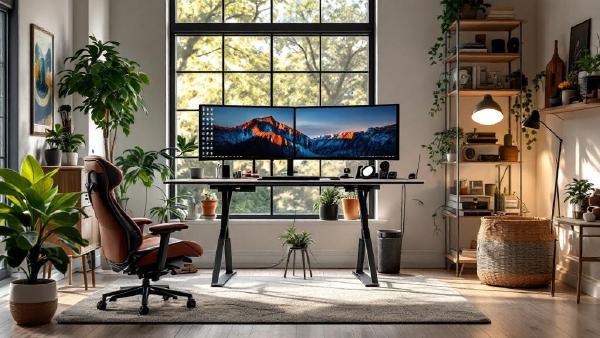
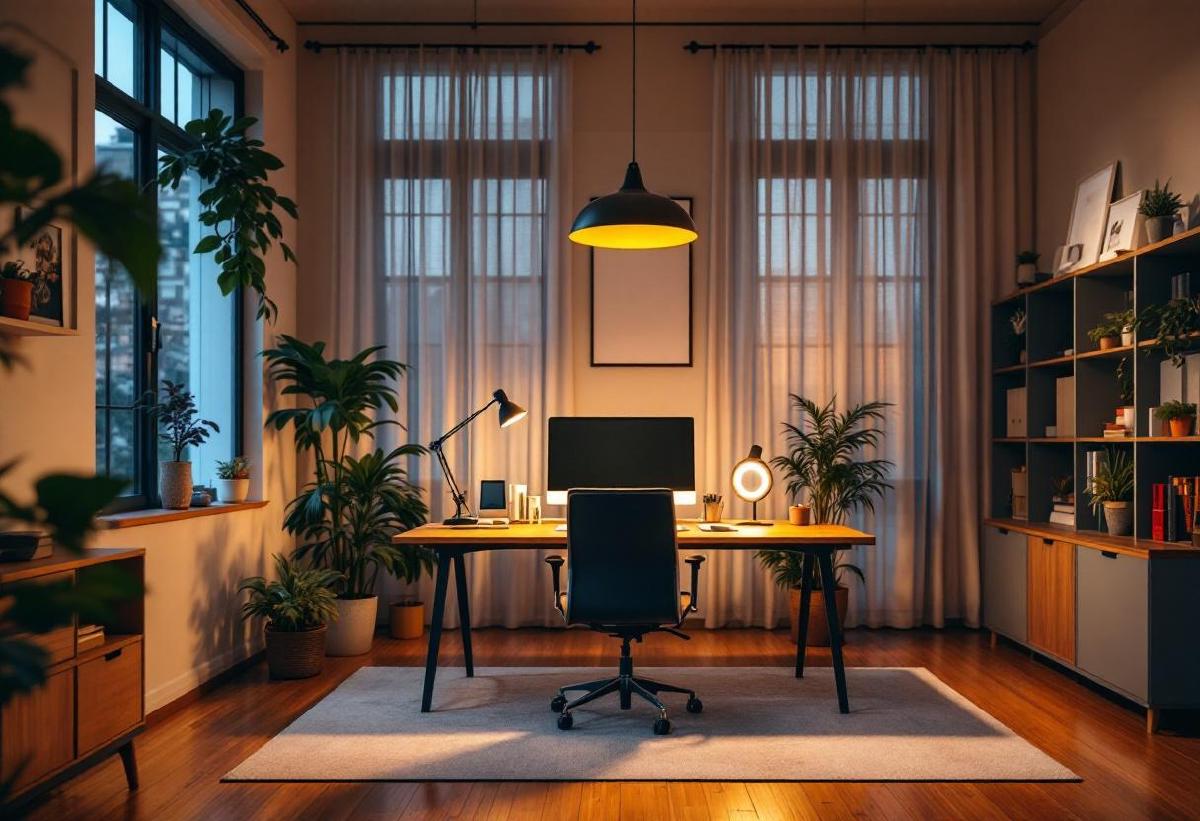
Proper lighting is one of the most overlooked yet crucial aspects of a productive home office. Poor lighting can cause eye strain, headaches, fatigue, and make you look unprofessional on video calls. In contrast, a well-designed lighting setup boosts productivity, improves mood, and creates an environment where you actually enjoy working.
This comprehensive guide will teach you everything you need to know about creating the perfect home office lighting setup, from understanding different types of lighting to choosing specific fixtures and optimizing for video calls.
Why Home Office Lighting Matters #
Health and Productivity Benefits #
Reduced Eye Strain Proper lighting reduces the stark contrast between bright screens and dark surroundings, preventing digital eye strain and related headaches.
Better Mood and Energy Quality lighting, especially full-spectrum and natural light, helps regulate circadian rhythms and maintain energy levels throughout the day.
Increased Focus Well-lit spaces have been proven to improve concentration and cognitive performance, making you more productive.
Professional Appearance Good lighting makes you look more professional and confident on video calls, which is crucial for remote work success.
Understanding Different Types of Lighting #
The Three-Layer Lighting Approach #
1. Ambient Lighting (General Illumination) This provides overall illumination for your space. Examples include ceiling lights, recessed lighting, or floor lamps that light the entire room.
2. Task Lighting (Focused Work Light) Specific lighting for work activities like reading, writing, or computer work. Desk lamps and monitor light bars fall into this category.
3. Accent Lighting (Mood Enhancement) Decorative lighting that adds ambiance and visual interest. This includes wall sconces, LED strips, or decorative table lamps.
Light Temperature Guide #
| Color Temperature | Kelvin (K) | Best For | Characteristics |
|---|---|---|---|
| Warm White | 2700K-3000K | Evening work, relaxation | Cozy, yellowish, calming |
| Neutral White | 3500K-4100K | All-day work | Balanced, natural feeling |
| Cool White | 5000K-6500K | Detail work, focus tasks | Bright, bluish, energizing |
| Daylight | 6500K+ | Matching natural light | Crisp, blue-white, alerting |
Essential Home Office Lighting Equipment #
Best Desk Lamps for Home Office #
1. BenQ ScreenBar Halo ($109) #
A unique monitor light bar that eliminates screen glare while providing excellent task lighting.
Key Features:
- Asymmetric optical design (lights desk, not screen)
- Adjustable color temperature (2700K-6500K)
- Wireless controller for easy adjustments
- USB-C powered
Best For: Computer-heavy work, small desks, minimal desk clutter
Buy on Amazon US | Buy on Amazon UK
2. Philips Hue Go Portable Light ($79) #
A versatile portable light with color-changing capabilities and app control.
Key Features:
- Full RGB color spectrum
- Portable with 3-hour battery life
- Smart home integration
- Multiple lighting presets
Best For: Flexible lighting needs, accent lighting, video calls
Buy on Amazon US | Buy on Amazon UK
3. IKEA FORSÅ Work Lamp ($25) #
An affordable, adjustable desk lamp that punches above its weight.
Key Features:
- Fully adjustable arm and head
- Classic design that fits any decor
- E26 bulb socket (use with LED bulbs)
- Stable base
Best For: Budget-conscious setups, traditional task lighting
Buy on Amazon US | Buy on Amazon UK
4. TaoTronics LED Desk Lamp TT-DL16 ($45) #
A feature-rich LED desk lamp with multiple lighting modes and USB charging.
Key Features:
- 5 color temperatures and 7 brightness levels
- Built-in USB charging port
- Touch controls with memory function
- Eye-caring design
Best For: All-around office use, device charging, customizable lighting
Buy on Amazon US | Buy on Amazon UK
5. Humanscale M/Connect Docking Station with Light ($849) #
A premium monitor arm with integrated LED lighting and docking capabilities.
Key Features:
- Integrated monitor arm and task light
- 90+ USB-C docking station
- Adjustable LED panel
- Cable management system
Best For: Premium setups, monitor mounting, all-in-one solutions
Buy on Amazon US | Buy on Amazon UK
Overhead Lighting Solutions #
Smart Ceiling Fixtures #
Philips Hue White and Color Ambiance A19 - Retrofit existing fixtures with smart bulbs that adjust throughout the day.
LIFX Clean - Antimicrobial coating plus full-spectrum lighting in a smart bulb format.
LED Panel Lights #
Govee Immersion LED Light Strip - Behind-monitor lighting that reduces eye strain and adds ambiance.
Nanoleaf Shapes - Modular LED panels for creative accent lighting.
Video Call Lighting Equipment #
Ring Lights for Video Calls #
Neewer 18-inch LED Ring Light ($89)
- Dimmable with color temperature adjustment
- Phone and camera mounts included
- Professional-quality illumination
Buy on Amazon US | Buy on Amazon UK
UBeesize 10-inch Ring Light ($35)
- Compact desktop version
- USB powered
- Perfect for laptop users
Buy on Amazon US | Buy on Amazon UK
Room-by-Room Lighting Strategies #
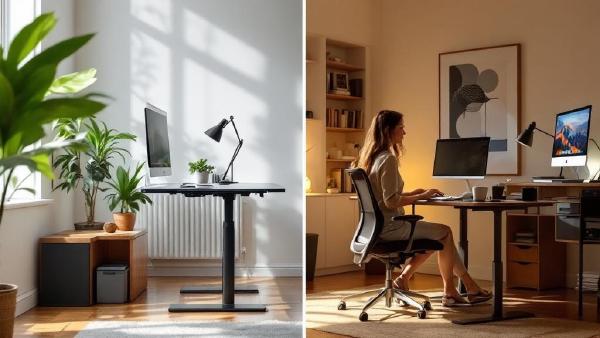
Small Home Office (Under 100 sq ft) #
Minimum Setup:
- One adjustable desk lamp (like BenQ ScreenBar)
- One overhead fixture with smart bulb
- Window treatment for natural light control
Optimal Setup:
- Monitor light bar for task lighting
- Smart ceiling fixture with adjustable temperature
- Small accent light for ambiance
- Ring light for video calls
Medium Home Office (100-200 sq ft) #
Minimum Setup:
- Desk lamp + overhead lighting
- Floor lamp for ambient lighting
- Window treatments
Optimal Setup:
- Multiple task lights (desk lamp + monitor light)
- Layered overhead lighting (ceiling fixture + floor lamp)
- Accent lighting (LED strips or decorative lamps)
- Dedicated video call lighting
Large Home Office (200+ sq ft) #
Minimum Setup:
- Multiple light sources for even coverage
- Zone lighting for different activities
- Natural light optimization
Optimal Setup:
- Comprehensive three-layer lighting system
- Smart lighting controls
- Professional video call setup
- Acoustic and lighting integration
Natural Light Optimization #
Window Positioning #
Ideal Setup:
- Windows to the side of your workspace (not behind or in front)
- North-facing windows provide consistent, soft light
- Multiple windows for balanced illumination
Managing Challenges:
- Direct sunlight: Use adjustable blinds or curtains
- Glare on screens: Position monitors perpendicular to windows
- Insufficient natural light: Supplement with full-spectrum artificial lighting
Window Treatments for Home Offices #
Adjustable Blinds Allow precise control over light direction and intensity. Venetian blinds work well for redirecting light upward.
Sheer Curtains Soften harsh sunlight while maintaining brightness. Great for south-facing windows.
Light-Filtering Cellular Shades Provide privacy while diffusing natural light evenly throughout the space.
Creating the Perfect Lighting for Video Calls #
Key Principles for Video Lighting #
Face the Light Source Position yourself facing your main light source (window or ring light) to avoid unflattering shadows.
Avoid Backlighting Never sit with a bright window or light source directly behind you, as this creates a silhouette effect.
Use Soft, Diffused Light Harsh direct lighting creates unflattering shadows. Use lampshades, diffusers, or bounce light off walls.
Multiple Light Sources Use both overhead and face-level lighting to eliminate shadows under the eyes and chin.
Video Call Lighting Setups #
Budget Setup ($50-$100) #
- Ring light positioned behind your monitor
- Desk lamp for fill lighting
- Adjust existing overhead lighting
Professional Setup ($200-$400) #
- Larger ring light or softbox
- Key light + fill light setup
- Background accent lighting
- Adjustable color temperature
Premium Setup ($500+) #
- Professional LED panels
- Multiple adjustable lights
- Smart lighting integration
- Professional lighting control system
Common Lighting Mistakes to Avoid #
Mistake 1: Single Light Source #
Problem: Creates harsh shadows and uneven illumination Solution: Use multiple light sources at different levels
Mistake 2: Wrong Color Temperature #
Problem: Cool light in the evening or warm light for detailed work Solution: Use adjustable temperature lights or multiple fixtures
Mistake 3: Insufficient Task Lighting #
Problem: Eye strain from inadequate lighting for close work Solution: Add dedicated desk lamps or monitor lights
Mistake 4: Screen Glare #
Problem: Lights reflecting off computer screens Solution: Position lights to illuminate work surface, not screen
Mistake 5: Overhead-Only Lighting #
Problem: Creates shadows on work surface and under facial features Solution: Add desk-level task lighting
Lighting for Different Work Tasks #
Computer Work #
- Primary: Monitor light bar or desk lamp positioned to avoid glare
- Support: Soft ambient lighting to reduce contrast
- Color temperature: 4000K-5000K for alertness
Reading and Writing #
- Primary: Adjustable desk lamp from the side
- Support: General room lighting
- Color temperature: 3000K-4000K for comfort
Creative Work (Drawing, Design) #
- Primary: High CRI (Color Rendering Index) lighting
- Support: Multiple light sources to minimize shadows
- Color temperature: 5000K-6500K for color accuracy
Video Calls #
- Primary: Ring light or softbox facing you
- Support: Ambient lighting to prevent stark contrasts
- Color temperature: 3500K-4500K for flattering skin tones
Smart Lighting Integration #
Popular Smart Lighting Platforms #
Philips Hue
- Extensive product range
- Excellent app and automation
- Works with all major smart home platforms
LIFX
- Brighter output than Hue
- No hub required
- Good integration options
Govee
- Budget-friendly smart lighting
- Creative products (strip lights, panels)
- Decent app experience
Automation Ideas #
Time-Based Adjustments
- Morning: Bright, cool light to promote alertness
- Afternoon: Balanced neutral lighting
- Evening: Warm, dim lighting to wind down
Activity-Based Scenes
- “Focus Mode”: Bright task lighting, minimal distractions
- “Video Call”: Flattering face lighting, background accent
- “Break Time”: Warm, relaxing ambient lighting
Integration with Calendar
- Automatically adjust lighting based on scheduled meetings
- Dim lights during presentation mode
- Bright lighting for detail work sessions
Health and Ergonomic Considerations #
Circadian Rhythm Support #
Morning Light Exposure Use bright, blue-rich light (5000K+) in the morning to signal wake time and boost alertness.
Evening Light Management Switch to warm, dim lighting (2700K-3000K) 2-3 hours before bedtime to promote natural sleep cycles.
Seasonal Adjustments Increase light intensity during winter months to combat seasonal mood changes.
Eye Health Protection #
20-20-20 Rule Every 20 minutes, look at something 20 feet away for 20 seconds. Good ambient lighting makes this more effective.
Contrast Management Maintain a 3:1 ratio between screen brightness and surrounding lighting to reduce eye strain.
Glare Prevention Use matte screen protectors and position lights to avoid reflections on your monitor.
Budget-Conscious Lighting Solutions #
DIY Lighting Improvements #
Maximize Natural Light
- Clean windows regularly
- Use light-colored walls to reflect more light
- Add mirrors to bounce light around the room
Upgrade Existing Fixtures
- Replace incandescent bulbs with adjustable LED bulbs
- Add lampshades or diffusers to harsh lights
- Reposition existing lamps for better coverage
Budget-Friendly Additions
- String lights for accent lighting ($15-$30)
- Clip-on desk lamps ($20-$40)
- LED strip lights for bias lighting ($25-$50)
Phased Lighting Upgrades #
Phase 1: Basic Functionality ($50-$100)
- One good desk lamp
- Smart bulb for overhead fixture
- Basic window treatment
Phase 2: Enhanced Comfort ($100-$200)
- Add ambient lighting
- Upgrade to higher-quality task lighting
- Improve video call lighting
Phase 3: Professional Setup ($200+)
- Smart lighting integration
- Professional video lighting
- Accent and mood lighting
Troubleshooting Common Issues #
Problem: Frequent Headaches #
Potential Causes:
- Insufficient lighting causing eye strain
- Flickering fluorescent lights
- Too much blue light exposure
Solutions:
- Increase ambient lighting
- Switch to LED fixtures
- Use blue light filtering or adjust color temperature
Problem: Feeling Tired During the Day #
Potential Causes:
- Insufficient bright light in the morning
- Too much warm light during work hours
- Poor circadian rhythm regulation
Solutions:
- Add bright, cool lighting in the morning
- Use 4000K-5000K lighting during peak work hours
- Minimize bright light exposure in the evening
Problem: Looking Bad on Video Calls #
Potential Causes:
- Backlighting from windows
- Overhead lighting creating shadows
- Insufficient face-level lighting
Solutions:
- Reposition yourself to face natural light
- Add a ring light or desk lamp behind your monitor
- Use multiple light sources to fill shadows
Maintenance and Long-Term Considerations #
LED Maintenance #
- Clean fixtures regularly to maintain brightness
- Check for color temperature shifts over time
- Replace bulbs when they reach 70% of original brightness
Smart Lighting Updates #
- Keep firmware updated for optimal performance
- Regularly review and adjust automation rules
- Monitor energy usage and optimize settings
Seasonal Adjustments #
- Adapt lighting schedules for changing daylight hours
- Adjust color temperature preferences seasonally
- Consider light therapy during darker months
Frequently Asked Questions #
How much should I spend on home office lighting? #
Basic Setup: $75-$150 for essential task and ambient lighting Comfortable Setup: $200-$400 for quality layered lighting Professional Setup: $500+ for comprehensive smart lighting system
What’s the best color temperature for working? #
For general office work, 4000K-5000K provides good alertness without being too harsh. Adjust based on the time of day and specific tasks.
Can I use gaming RGB lighting in my home office? #
Yes, but use it strategically. RGB lights can provide good accent lighting and mood setting, but ensure you have proper white light for actual work tasks.
How do I prevent computer screen glare? #
Position your monitor perpendicular to windows, use bias lighting behind your screen, and ensure your task lighting illuminates your work surface rather than the screen.
Should I use warm or cool light for video calls? #
Slightly warm neutral light (3500K-4500K) is most flattering for video calls, providing good visibility while making skin tones appear natural.
How many lumens do I need for my home office? #
- General lighting: 20-30 lumens per square foot
- Task lighting: 50-75 lumens per square foot of work surface
- Video calls: 500-1000 lumens on your face
Is expensive smart lighting worth it? #
Smart lighting pays off if you value convenience, want automated adjustments throughout the day, or need precise control for video calls. Start with basic smart bulbs before investing in premium systems.
Conclusion #
Creating the perfect home office lighting setup is an investment in your health, productivity, and professional image. Start with the basics—good task lighting and controlled natural light—then build layers of ambient and accent lighting as your needs and budget allow.
Remember that lighting needs are personal and can vary based on your work style, space constraints, and health considerations. Don’t be afraid to experiment with different combinations until you find what works best for you.
The key is to think beyond simple illumination and consider how different lighting affects your mood, energy, focus, and appearance throughout the day. With the right lighting setup, your home office becomes not just a place to work, but a space that actively supports your success.
Ready to upgrade other aspects of your home office? Check out our guides on the best monitors for working from home and ergonomic desk setup., task lighting