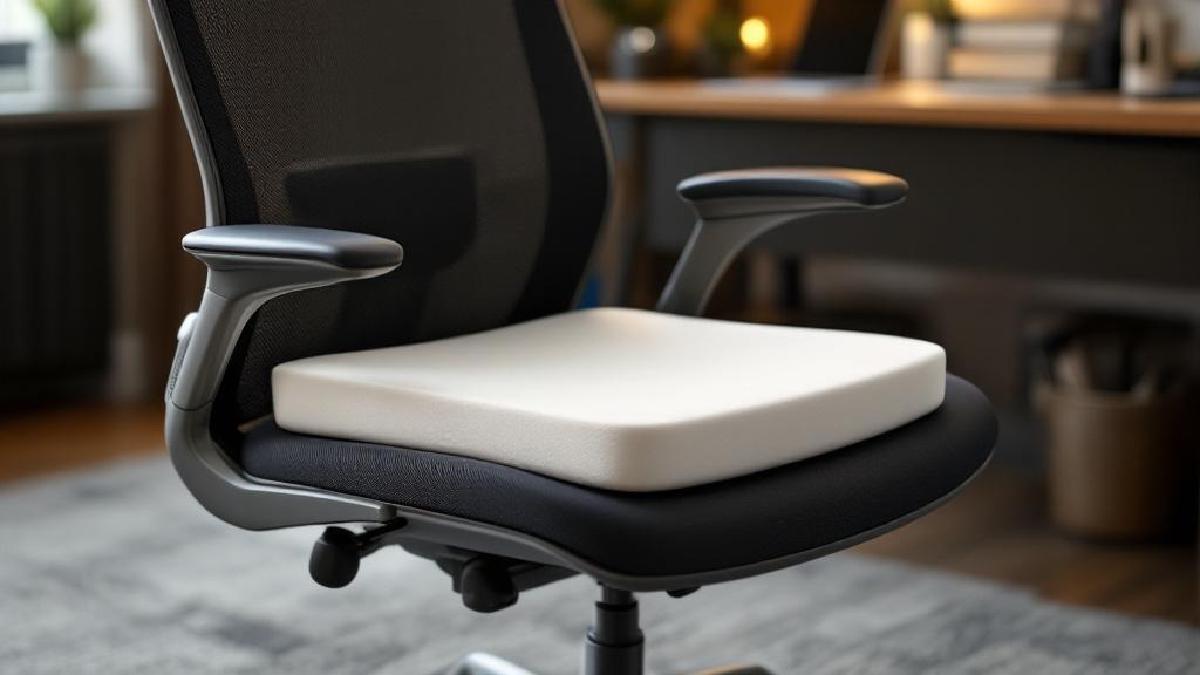
Even the best ergonomic chair can feel punishing after eight hours. An office chair cushion adds pressure relief, tailbone support, and temperature regulation — often for under $50. If you’re stuck with a mediocre chair (or a kitchen chair that’s been “temporary” for three years), a quality seat cushion is the cheapest ergonomic upgrade you can make.
We evaluated cushions on pressure distribution, durability after 6+ months of daily use, cover washability, and whether they actually stay put on the chair. Here are the seven best office chair cushions for 2026.
Quick Comparison Table #
| Cushion | Price (USD) | Type | Dimensions | Cover Washable | Weight Capacity | Best For |
|---|---|---|---|---|---|---|
| Purple Royal Seat Cushion | $79 | Gel Grid | 17.5" × 15.5" × 1.5" | Yes | No limit stated | Overall best |
| Tempur-Pedic Seat Cushion | $89 | Memory Foam | 16" × 16" × 2.5" | Yes | 250 lb | Premium comfort |
| Everlasting Comfort Seat Cushion | $35 | Memory Foam | 17.5" × 14" × 3" | Yes | 230 lb | Budget pick |
| ComfiLife Gel Enhanced | $33 | Gel + Foam | 17.5" × 14.5" × 2.8" | Yes | 250 lb | Tailbone pain |
| Cushion Lab Ergonomic | $55 | Dense Foam | 18" × 16" × 3.5" | Yes | 280 lb | Large frames |
| Purple Simply Seat Cushion | $49 | Gel Grid | 15.75" × 15.75" × 1.25" | Yes | No limit stated | Value gel option |
| Klaudena Seat Cushion | $40 | Memory Foam | 18" × 15" × 3" | Yes | 260 lb | Coccyx relief |
1. Purple Royal Seat Cushion — Best Overall #
Price: $119 on Amazon US | £99 on Amazon UK
Purple’s GelFlex Grid does what memory foam can’t: it flexes under pressure points while maintaining airflow through hundreds of open channels. The result is a cushion that doesn’t go flat after a month and never gets hot.
What we like:
- GelFlex Grid distributes weight evenly without bottoming out
- Temperature neutral — no summer sweat problem
- Extremely durable; doesn’t lose shape over time
- Machine-washable polyester cover with non-slip base
What we don’t:
- Heavier than foam alternatives (3.5 lb)
- Premium price for a seat cushion
- Takes a few days to adjust to the grid feel
The Royal is the larger, thicker version of Purple’s seat cushion lineup. If you’re using an ergonomic chair that just needs a bit more cushioning, this is the one. If you want to save, see the Simply Seat Cushion below.
Verdict: Best overall for anyone willing to invest in long-term sitting comfort. The gel grid outlasts foam by years.
2. Tempur-Pedic Seat Cushion — Best Premium Memory Foam #
Price: $89 on Amazon US | £80 on Amazon UK
Tempur-Pedic’s proprietary TEMPUR material is denser and more pressure-sensitive than generic memory foam. It molds precisely to your shape rather than just sinking. The trade-off: it runs warm, and it’s the most expensive foam option here.
What we like:
- TEMPUR material provides superior pressure relief
- Contoured shape supports thighs and sits bones
- Bevelled front edge reduces pressure behind knees
- Premium build quality matches the brand reputation
What we don’t:
- Runs warm; no cooling gel layer
- Cover is removable but hand-wash only
- At $89, it’s expensive for foam
- Relatively thin for heavier users
Pairs well with a footrest to keep your legs at the right angle. The combination transforms even a basic office chair.
Verdict: If you trust the Tempur-Pedic name and want the most body-conforming foam experience, this delivers. Just expect warmth in summer.
3. Everlasting Comfort Seat Cushion — Best Budget #
Price: $35 on Amazon US | £30 on Amazon UK
At $35, Everlasting Comfort punches well above its price. The U-shaped cutout relieves tailbone pressure, and the memory foam is dense enough to last a year of daily use before noticeable compression. It’s the default recommendation for anyone on a budget.
What we like:
- U-shaped cutout for tailbone and sciatica relief
- Dense memory foam with decent longevity
- Non-slip rubber base actually works
- Machine-washable velour cover
- Lifetime replacement guarantee
What we don’t:
- Foam compresses noticeably after 12-18 months
- Gets warm; no gel or airflow channels
- Velour cover attracts lint and pet hair
- Size may feel narrow for larger users
If your home office setup is still coming together and you’re not ready for a $500 chair, this $35 cushion on any chair is a legitimate ergonomic solution.
Verdict: Best value. The lifetime replacement guarantee means even if the foam compresses, you’re covered.
4. ComfiLife Gel Enhanced Seat Cushion — Best for Tailbone Pain #
Price: $33 on Amazon US | £28 on Amazon UK
ComfiLife combines a cooling gel layer on top with supportive memory foam underneath, plus a deep U-shaped coccyx cutout. It’s specifically designed for people dealing with tailbone, sciatic, or lower back pain — and at $33, it’s one of the most affordable therapeutic cushions available.
What we like:
- Gel layer adds cooling that pure foam cushions lack
- Deep coccyx cutout provides genuine pressure relief
- Built-in carry handle for office-to-car portability
- Non-slip base grips most chair surfaces
- Over 100,000 Amazon reviews with 4.5+ stars
What we don’t:
- Gel layer is thin; cooling effect is moderate
- Foam density is average; expect compression over time
- Slightly narrow at 14.5" wide
- Handle adds bulk to the profile
Works alongside a lumbar support pillow for complete seated posture correction. The combo costs less than most ergonomic chairs.
Verdict: If tailbone pain is your primary issue, the coccyx cutout design makes this more effective than flat cushions at any price.
5. Cushion Lab Ergonomic Seat Cushion — Best for Large Frames #
Price: $55 on Amazon US | £50 on Amazon UK
Cushion Lab’s offering is wider (18"), thicker (3.5"), and denser than most competitors. The extra-dense “Hyperfoam” doesn’t bottom out under heavier users, and the ergonomic contour with raised side bolsters keeps you centered on the cushion rather than sliding around.
What we like:
- Extra-wide 18" base fits larger body types
- Hyperfoam density resists compression long-term
- Side bolsters prevent lateral sliding
- Front waterfall edge reduces thigh pressure
- 280 lb tested capacity
What we don’t:
- Heavier and bulkier than standard cushions
- Premium price for a foam cushion
- Side bolsters may feel restrictive for some
- Cover removes easily but spot-clean only
If you’ve tried cheaper cushions that bottomed out under your weight, this is the upgrade. Combine with a standing desk for sit/stand variety throughout the day.
Verdict: The most supportive cushion for users over 200 lb. Dense foam and wide base make it a category standout.
6. Purple Simply Seat Cushion — Best Value Gel Option #
Price: $49 on Amazon US | £45 on Amazon UK
The Simply is the smaller, thinner sibling of the Royal above. Same GelFlex Grid technology, same temperature neutrality, same durability — just a lower profile and $30 less. For lighter users or those who want gel benefits without the bulk, it’s the smarter buy.
What we like:
- Same GelFlex Grid as the Royal at a lower price
- Low profile (1.25") doesn’t raise seat height much
- Temperature neutral; won’t trap heat
- Extremely long-lasting material
- Machine-washable cover
What we don’t:
- Thinner profile means less cushioning for heavier users
- Still pricier than most foam options
- Slightly smaller footprint than the Royal
- May feel firm initially; needs break-in period
Great pairing with a desk mat for a complete comfort upgrade on a modest budget.
Verdict: The entry point to Purple’s gel grid technology. Best for users under 180 lb who want durability over plushness.
7. Klaudena Seat Cushion — Best for Coccyx Relief #
Price: $40 on Amazon US | £35 on Amazon UK
Klaudena went viral for a reason: the deep contour design with an aggressive coccyx channel provides more tailbone relief than any flat or U-shaped cushion. The memory foam is medium-density, striking a balance between softness and support. It’s specifically engineered for people who’ve injured their tailbone or sit on hard surfaces.
What we like:
- Deepest coccyx channel in this roundup
- Contoured design promotes natural pelvic tilt
- Medium-density foam balances comfort and support
- Breathable mesh cover with zip-off washing
- 260 lb capacity with minimal compression
What we don’t:
- Contour shape takes adjustment; not for everyone
- Foam retains some heat
- Won’t fit narrow chairs well at 18" wide
- Less effective for general comfort vs. targeted pain relief
If you’re dealing with a coccyx injury or post-surgical recovery, this is purpose-built for that problem. Combine with a headset for comfortable all-day calls while seated.
Verdict: Most targeted coccyx relief design. If tailbone pain is severe, this specialized contour outperforms generic cushions.
How to Choose the Right Chair Cushion #
Pain-driven decision:
- General comfort → Purple Royal or Tempur-Pedic
- Tailbone/coccyx pain → ComfiLife or Klaudena
- Sciatica → U-shaped cutout designs (Everlasting Comfort, ComfiLife)
Material decision:
- Memory foam: conforms to shape, runs warm, degrades over 1-2 years
- Gel grid: temperature neutral, lasts 3-5+ years, firmer feel
- Gel + foam hybrid: moderate cooling, moderate lifespan
Size decision:
- Under 180 lb → any cushion works; Purple Simply for gel on a budget
- 180-230 lb → Everlasting Comfort or Purple Royal
- 230+ lb → Cushion Lab Ergonomic (widest, densest)
Frequently Asked Questions #
Do chair cushions actually help with back pain? #
Yes, but indirectly. A cushion improves pelvic alignment and reduces pressure points, which decreases compensatory posture that causes back pain. For direct lumbar support, combine a seat cushion with a chair that has proper lumbar adjustment.
How often should I replace my office chair cushion? #
Memory foam cushions typically need replacing every 12-24 months as foam compresses. Gel grid cushions (like Purple) last 3-5 years. If you notice you’re “bottoming out” — feeling the chair surface through the cushion — it’s time.
Can I use a chair cushion on a standing desk stool? #
Yes. Most cushions work on any flat seating surface. Check that the non-slip base grips the stool material. Smaller cushions like the Purple Simply work best on compact stools.
Memory foam vs gel: which is better? #
Memory foam molds more closely to your shape and feels softer initially, but it traps heat and degrades faster. Gel (especially grid designs) stays cooler and lasts longer but feels firmer. Neither is objectively better — it depends on whether you prioritize conformity or durability.
Do I still need a good chair if I use a cushion? #
A cushion improves any chair, but it can’t fix fundamentally bad ergonomics. If your chair lacks height adjustment, armrests, or back support, a cushion is a Band-Aid. Invest in a proper ergonomic setup when budget allows.
Are thicker cushions better? #
Not necessarily. Thicker cushions raise your seat height, which can throw off desk and monitor ergonomics. A 2-3" cushion is the sweet spot for most people. If you go thicker, adjust your monitor arm height accordingly.
We test and recommend the best products for your home office. When you buy through our links, we may earn a commission — at no extra cost to you. This helps us keep creating helpful content.