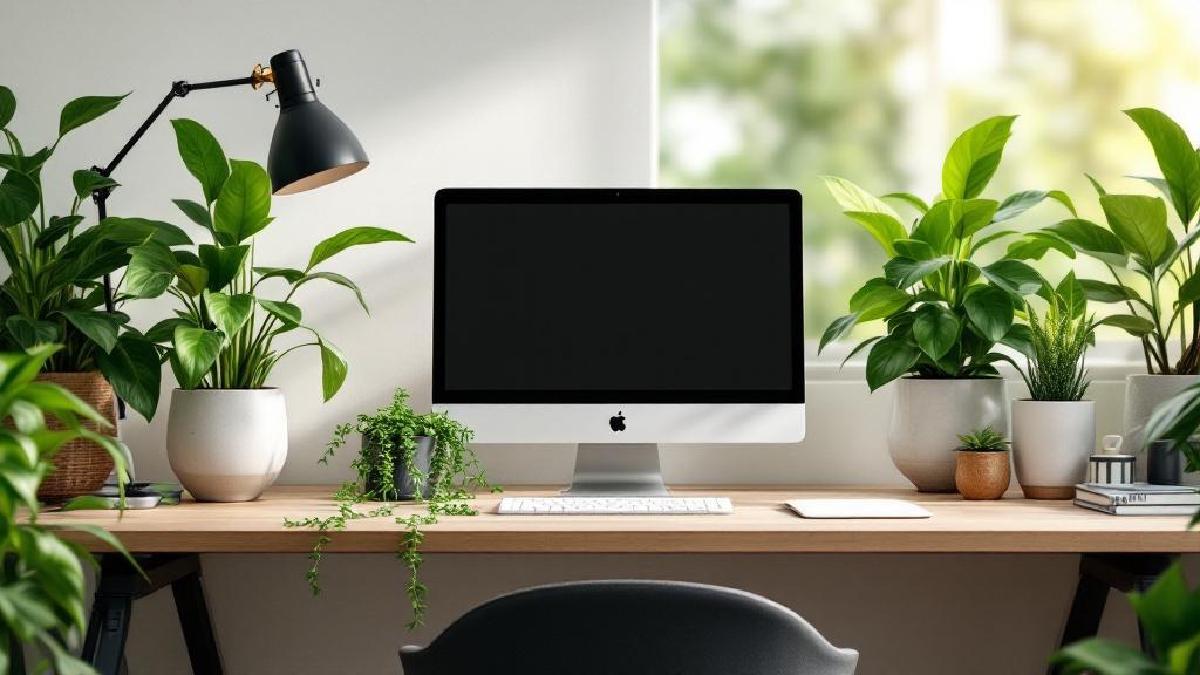
Plants on your desk aren’t just decoration — research consistently shows they reduce stress, improve air quality, and boost productivity. The problem? Most of us kill them within a month.
This guide focuses on desk-sized plants that are genuinely hard to kill, plus the best planters and accessories to keep them alive. Every product links to Amazon for easy ordering.
Our Top Picks at a Glance #
- Pothos (Devil’s Ivy) — Near-indestructible desk plant, ~$15–25, care level: minimal
- ZZ Plant (Zamioculcas) — Best for low light offices, ~$20–30, care level: minimal
- Snake Plant (Sansevieria) — Best air purifier, ~$15–30, care level: minimal
- Chinese Evergreen (Aglaonema) — Best for colour variety, ~$15–25, care level: easy
- Succulents Variety Pack — Best for bright desks, ~$20–30, care level: easy
- Peace Lily — Best flowering desk plant, ~$20–35, care level: easy
- Rubber Plant (Ficus elastica) — Best statement plant, ~$15–30, care level: easy
- Spider Plant (Chlorophytum) — Best pet-safe option, ~$10–20, care level: minimal
- LECHUZA Cube Planter — Best self-watering planter, ~$25–40
- Miracle-Gro Indoor Plant Food — Best plant food, ~$10
1. Pothos (Devil’s Ivy) — Best Overall Desk Plant #
If you can only get one plant, get a pothos. It tolerates low light, irregular watering, and general neglect with remarkable grace. The trailing vines look great draped over a monitor riser or cascading from a hanging planter next to your desk.
Pothos actively purifies air by removing formaldehyde, benzene, and carbon monoxide. It grows fast enough to feel rewarding but not so fast that it takes over your workspace.
Water it when the soil feels dry. That’s it. That’s the entire care guide.
Why it’s great for offices:
- Thrives in fluorescent lighting
- Only needs watering every 1–2 weeks
- Trails beautifully or climbs with support
- Propagates easily — snip a vine, put it in water, new plant
Watch out for:
- Toxic to pets if ingested
- Can get leggy in very low light (just trim it)
Seasonal tips: Growth slows in winter — cut watering back to every 2–3 weeks and skip the fertiliser until spring. In summer, you might notice faster vine growth; this is the ideal time to take cuttings and propagate new plants for other rooms.
👉 Check price on Amazon US | Amazon UK
2. ZZ Plant (Zamioculcas zamiifolia) — Best for Low Light #
The ZZ Plant is the cockroach of the plant world — it simply refuses to die. It stores water in its thick rhizomes and can survive months of drought. It tolerates everything from bright indirect light to the darkest corner of your office.
The glossy, dark green leaves look modern and architectural. It grows slowly, so it won’t outgrow its desk spot for years. If you’ve killed every plant you’ve ever owned, start here.
If your office lacks natural light entirely, pair a ZZ with a good desk lamp — even a few hours of indirect artificial light helps.
Why it’s great for offices:
- Survives in near-darkness
- Water once every 2–3 weeks (less in winter)
- Glossy leaves look clean and modern
- Extremely slow-growing — stays desk-sized
Watch out for:
- Toxic to pets and children
- Overwatering is the main killer (less is more)
Placement tip: ZZ plants look best on desk corners or on top of storage units where their upright, symmetrical shape can stand out. Keep them away from heating vents — the dry air can cause leaf tips to brown.
👉 Check price on Amazon US | Amazon UK
3. Snake Plant (Sansevieria) — Best Air Purifier #
NASA’s Clean Air Study put the snake plant near the top of the list for filtering indoor toxins. It’s one of the few plants that converts CO2 to oxygen at night, making it ideal for enclosed home offices with limited ventilation. If you’re also considering an air purifier, a snake plant is a great natural complement.
The upright, sword-like leaves come in dozens of varieties — from compact 6-inch desk plants to tall floor specimens. For a desk, look for the ‘Hahnii’ or ‘Cylindrica’ varieties that stay small.
Why it’s great for offices:
- NASA-verified air purification
- Produces oxygen at night (unusual for plants)
- Watering once every 2–3 weeks
- Upright growth — doesn’t sprawl across your desk
Watch out for:
- Root rot from overwatering (use well-draining soil)
- Mildly toxic to pets
Light and placement: Snake plants genuinely don’t care. North-facing window, fluorescent overhead, corner of the room — they’ll survive. They grow faster in brighter conditions, but “faster” for a snake plant still means maybe one new leaf per month.
👉 Check price on Amazon US | Amazon UK
4. Chinese Evergreen (Aglaonema) — Best for Colour Variety #
If you want something more visually interesting than “yet another green plant,” Chinese Evergreens come in stunning colour combinations — silver and green, pink and cream, red-edged leaves. They’re almost as tough as ZZ plants but far more decorative.
Aglaonemas are native to tropical forest floors, so they’re pre-adapted to exactly the conditions of most offices: low-to-moderate light, stable temperatures, and still air. They grow slowly and stay compact, rarely exceeding 12–18 inches on a desk.
Why it’s great for offices:
- Beautiful variegated foliage in multiple colour options
- Handles low light well (darker varieties tolerate it best)
- Water every 1–2 weeks
- Stays compact and bushy
Watch out for:
- Sensitive to cold drafts — keep away from windows in winter
- Toxic to pets
- Pink/red varieties need slightly more light to keep their colour
Pro tip: The darker green varieties (like ‘Maria’ or ‘Silver Bay’) tolerate the lowest light. If you want the showy pink varieties, place them within a few feet of a window.
👉 Check price on Amazon US | Amazon UK
5. Succulents Variety Pack — Best for Bright Desks #
If your desk gets decent natural light, a cluster of succulents is hard to beat. They come in an absurd variety of shapes, colours, and textures — and a pack of 5–12 assorted succulents costs under $30.
The catch: succulents need light. If your desk is in a windowless room, skip these and get a pothos or ZZ plant instead. But near a window? They’re low-maintenance, compact, and endlessly photogenic.
Why they’re great for offices:
- Incredibly compact — perfect for small desks
- Variety packs give you instant visual interest
- Water every 1–2 weeks (less in winter)
- Great conversation starters on video calls
Watch out for:
- Need bright, indirect light (no dark corners)
- Overwatering kills them fast — when in doubt, don’t water
Display ideas: Group succulents in a shallow tray or wooden planter box next to your desk organiser for a clean, curated look. Mixing different heights and textures makes even a small arrangement look intentional.
👉 Check price on Amazon US | Amazon UK
6. Peace Lily — Best Flowering Desk Plant #
Want actual flowers on your desk? The peace lily delivers elegant white blooms several times a year without demanding much in return. It’s also one of the top air-purifying plants, filtering ammonia, benzene, formaldehyde, and trichloroethylene.
The best part: it tells you when it needs water. The leaves droop dramatically when thirsty, then perk right back up after watering. It’s basically a plant with a built-in notification system.
Why it’s great for offices:
- Produces white flowers in low light
- Droops visibly when thirsty (impossible to forget)
- Excellent air purification
- Thrives in fluorescent/indirect light
Watch out for:
- Toxic to pets
- Brown leaf tips if water quality is poor (use filtered)
- Slightly more attention-needing than ZZ or snake plants
Humidity note: Peace lilies love humidity. If your office air is dry — especially in winter with the heating on — mist the leaves occasionally or place it near a desk humidifier. You’ll get more blooms and fewer brown leaf tips.
👉 Check price on Amazon US | Amazon UK
7. Rubber Plant (Ficus elastica) — Best Statement Plant #
If you want a single plant that makes a visual impact, the rubber plant delivers. Its large, thick, glossy leaves in deep burgundy or dark green look striking on a desk without being fussy. It’s a member of the fig family but far more forgiving than the notoriously dramatic fiddle leaf fig.
Rubber plants start compact and grow slowly enough that a desk-sized specimen will stay manageable for a couple of years. When it eventually outgrows the desk, move it to the floor — they make excellent corner plants at 3–4 feet tall.
Why it’s great for offices:
- Bold, glossy foliage — looks expensive
- Tolerates lower light (though grows best in bright indirect)
- Water every 1–2 weeks
- Air-purifying properties
Watch out for:
- Sticky white sap if leaves break — mildly irritating to skin
- Leaves collect dust easily (wipe monthly with a damp cloth)
- Toxic to pets
Variety pick: The ‘Burgundy’ variety has deep, almost black leaves that look particularly good against a light desk. ‘Tineke’ has beautiful cream and green variegation but needs more light.
👉 Check price on Amazon US | Amazon UK
8. Spider Plant (Chlorophytum comosum) — Best Pet-Safe Option #
Got cats or dogs roaming your home office? The spider plant is your best bet. It’s non-toxic to pets, ridiculously easy to grow, and produces cascading “baby” plantlets that you can snip off and propagate endlessly.
Spider plants were another star of the NASA Clean Air Study and are particularly good at filtering carbon monoxide and xylene. The arching, variegated leaves add movement and life to a desk without taking up much footprint.
Why it’s great for offices:
- Non-toxic to cats and dogs — rare among easy-care plants
- Produces baby plantlets you can gift to colleagues
- Excellent air purification
- Thrives in a wide range of light conditions
Watch out for:
- Leaves can brown at tips in very dry air
- Cats love to bat at the dangling babies (harmless but messy)
- Needs slightly more water than ZZ or snake plants
Best placement: Spider plants look great in hanging planters or on a shelf above your desk where the babies can dangle freely. On a flat desk, keep them in a slightly elevated planter so the plantlets have room to cascade.
👉 Check price on Amazon US | Amazon UK
9. LECHUZA Cube Self-Watering Planter — Best Planter #
The LECHUZA Cube has a built-in water reservoir that lets plants drink what they need through a wicking system. Fill the reservoir every few weeks and forget about it. A water level indicator tells you exactly when to refill.
This solves the two main reasons desk plants die: overwatering and forgetting to water. The planter does both for you. It comes in multiple sizes and colours to match any desk aesthetic.
Why it’s great:
- Self-watering reservoir eliminates guesswork
- Water level indicator
- Clean, modern design
- Available in multiple sizes and colours
Watch out for:
- More expensive than basic pots
- Reservoir needs cleaning occasionally
👉 Check price on Amazon US | Amazon UK
10. Miracle-Gro Indoor Plant Food — Best Plant Food #
Even low-maintenance plants benefit from occasional feeding. Miracle-Gro Indoor Plant Food is a liquid concentrate you add to water — one pump per quart, every two weeks during growing season. It works for all the plants on this list.
Healthy plants grow fuller, produce more leaves, and look noticeably better than unfed ones. This is a $10 investment that lasts months.
Why it’s great:
- Works for all indoor plants
- Simple pump dispenser — no measuring
- Noticeable difference in growth within weeks
- One bottle lasts months
Watch out for:
- Don’t overfeed (follow the instructions)
- Reduce feeding in winter when growth slows
👉 Check price on Amazon US | Amazon UK
How to Choose the Right Desk Plant #
Not sure which plant to get? Work through these three questions:
1. How much light does your desk get?
- No natural light / windowless room: ZZ plant, pothos, or snake plant. These three genuinely don’t care.
- Some indirect light / near a window but not in direct sun: Chinese evergreen, peace lily, rubber plant, spider plant. All good mid-range options.
- Bright, direct sunlight for several hours: Succulents are your best choice here. Most other plants will scorch in direct afternoon sun.
2. Do you have pets?
- If cats or dogs have access to your office, the spider plant is the safest choice on this list. Boston ferns and calathea are also pet-safe but more demanding. Every other plant here is mildly toxic if chewed on — usually not life-threatening, but enough to cause stomach upset.
3. How often will you realistically water?
- “I’ll forget for weeks”: ZZ plant or snake plant. Both survive serious neglect.
- “Once a week is fine”: Pothos, Chinese evergreen, rubber plant, succulents.
- “I actually enjoy plant care”: Peace lily. It rewards attention with more blooms.
If you’re still unsure, start with a pothos. It’s the cheapest, most forgiving option and will build your confidence before you invest in anything fancier.
How to Keep Desk Plants Alive (The Short Version) #
- Don’t overwater. This kills more office plants than neglect. When in doubt, wait another day.
- Match plant to light. Low light room? ZZ plant or pothos. Sunny desk? Succulents.
- Use a self-watering planter if you’re forgetful — it removes the guesswork.
- Feed occasionally during spring/summer with liquid plant food.
- Wipe leaves every few weeks — dust blocks light absorption.
- Keep plants away from heating and cooling vents. Temperature swings and dry air stress most tropical plants. If your air runs dry, a desk humidifier helps both plants and people.
- Rotate your plant a quarter-turn each week so it grows evenly instead of leaning toward the light.
Frequently Asked Questions #
Do desk plants really improve productivity? #
Yes. Multiple studies, including research from the University of Exeter, found that office plants can increase productivity by up to 15%. They reduce stress, improve air quality, and make workspaces feel more pleasant — all of which contribute to better focus.
What’s the best plant for a desk with no natural light? #
The ZZ plant and pothos both handle low light exceptionally well. Snake plants also tolerate it. Avoid succulents and flowering plants in windowless rooms — they’ll slowly decline without adequate light.
How often should I water desk plants? #
Most desk plants only need water every 1–3 weeks. The golden rule: stick your finger an inch into the soil. If it’s dry, water. If it’s still moist, leave it. Overwatering causes root rot, which is the number one killer of indoor plants.
Are office plants safe around pets? #
Most popular desk plants (pothos, ZZ, snake plant, peace lily) are mildly toxic if pets chew on them. If you have a curious cat or dog in your home office, the spider plant is your best non-toxic option. Boston ferns and calathea are also pet-safe but need more care.
Do I need special soil for desk plants? #
Standard indoor potting mix works for most desk plants. For succulents, use a cactus/succulent mix with extra drainage. The key is avoiding garden soil, which compacts too tightly in pots and retains too much moisture.
Can I use a grow light instead of natural light? #
Absolutely. A full-spectrum LED grow light works well for any plant on this list. You can clip one onto your desk lamp or get a dedicated grow lamp. Run it 8–12 hours a day and most plants won’t know the difference.
How many plants should I put on my desk? #
One or two is plenty for most desks. You don’t want plants competing with your keyboard and monitor for space. If you want more greenery, use a shelf or monitor riser to add vertical space for plants without eating into your work surface.
Final Thoughts #
Adding a plant or two to your desk is one of the cheapest, highest-impact upgrades you can make to your home office. Start with something nearly indestructible — a pothos or ZZ plant — and build from there as your confidence grows.
For more ways to level up your workspace, check out our guides to the best desk accessories, best desk lamps, and the complete home office setup guide.